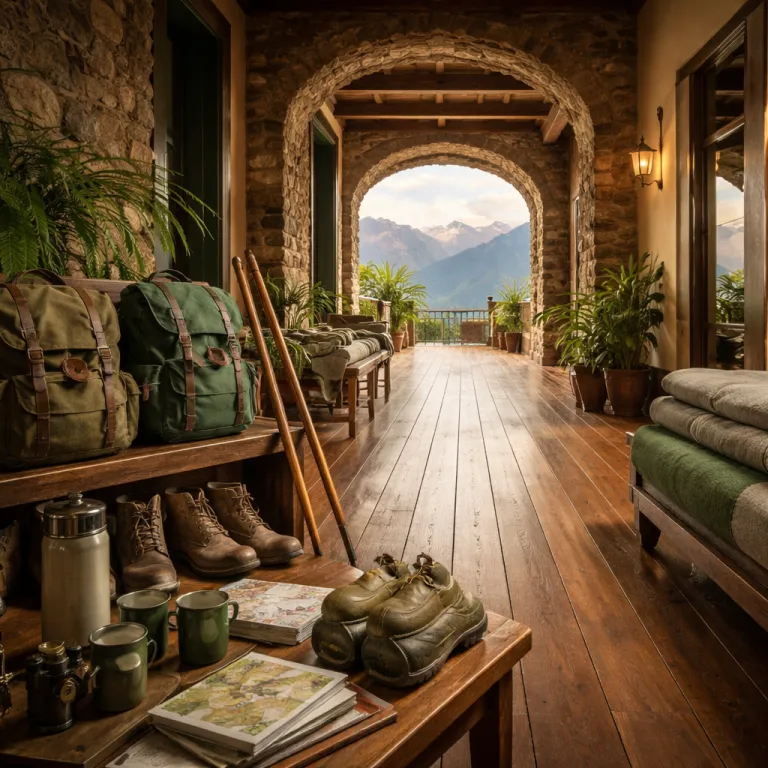
Why the Ecuador Sierra region is worth planning your trip around
Thin mountain air, terraced slopes, church domes catching the late Andean light – the Sierra region of Ecuador is not a backdrop, it is the main act. If you are wondering whether to base your stay here rather than rushing straight to the Amazon rainforest or the coast, the answer is simple : yes, if you care about character as much as scenery. Nights in the highlands bring crisp temperatures, long conversations by the fire, and a style of hotel that leans into stone, wood, and wool rather than glass and chrome.
Across the Sierra, from Quito to Cuenca, hotels tend to be smaller in scale, often converted from a historic casa or a former hacienda. That means fewer anonymous corridors and more courtyards, carved doors, and handwoven textiles. Guests who value a sense of place over a generic star rating usually find this region particularly rewarding. You come back from a day in the cloud forest or a walk through a colonial plaza and the hotel still feels part of the story, not a sealed‑off bubble.
This is not the destination for those who want a single mega‑resort with every possible activity on site. It suits travelers who enjoy assembling an itinerary : a night in a lodge near the cloud forest, a few nights in a refined city hotel in Quito, perhaps a stay in a rural hacienda on the way south. The Sierra rewards that kind of layered experience, and the best hotels in Ecuador’s highlands are designed to anchor each chapter of the journey.
Quito and the northern Sierra: where to stay, area by area
On Avenida Amazonas, a few blocks north of Quito’s El Ejido park, the skyline shifts from colonial domes to business towers and embassies. Here you find the classic “hotel Quito” profile : polished lobbies, clear star ratings, and an international style that appeals to guests who want predictability after a long flight. Being situated in Quito’s modern districts places you within a 30 to 45 minute drive of Mariscal Sucre International Airport, which matters if you are arriving late at night or leaving at dawn.
In this part of the city, properties such as JW Marriott Quito (large resort‑style pool, reliable international service; roughly mid‑to‑upper price band), Swissôtel Quito (business‑friendly, multiple restaurants and a spa; mid‑range to upper‑mid), and NH Collection Quito Royal (contemporary rooms, walkable to cafés and parks; solid mid‑range) illustrate the northern district profile. They suit travelers who want familiar comforts, clear facilities, and straightforward transfers more than creaking floorboards or cloistered courtyards.
Drop down to the historic center and the atmosphere changes immediately. Narrow streets like García Moreno and Chile climb past whitewashed churches and plazas, and many of the most atmospheric hotels are set in restored mansions around inner patios. Staying in or near the historic center works best for travelers who want to walk out the door to visit churches, museums, and cafés, and who appreciate the creak of old floorboards more than a long list of facilities. Here, the “star” of the stay is often the architecture itself rather than the official star rating.
In this older quarter, places such as Casa Gangotena (boutique luxury on Plaza San Francisco, with rooftop views; premium price tier), Hotel Plaza Grande (grand suites facing Plaza de la Independencia; upper‑range), and La Casona de la Ronda (characterful rooms on a historic street; comfortable mid‑range) show how colonial buildings can be adapted into intimate hotels. Rooms tend to be unique, ceilings high, and common areas filled with local art rather than standardized décor.
Beyond the city, the northern Sierra opens into a patchwork of fields and cloud forest. Rural lodges and haciendas between Quito and the cloud forest reserves offer a different kind of night : log fires, thick duvets, and early mornings with views towards distant volcanoes. This is where you look for a lodge experience that bridges the Andes and the Amazon rainforest, with day trips into the cloud forest and bird‑rich valleys, then a return to a quiet dining room rather than city lights.
Cuenca and the southern Sierra: historic charm with Andean calm
Along Calle Larga in Cuenca, balconies lean over the tram line and the Río Tomebamba slides quietly below. Hotels in this part of the southern Sierra tend to be more intimate, often housed in townhouses that open onto internal gardens or terraces overlooking the river. The city’s historic core – the Cuenca historic center – is compact, so choosing a hotel within a short walk of Parque Calderón usually means you can explore on foot and return easily for a midday rest.
In and around the center, properties such as Mansion Alcázar Boutique Hotel (romantic courtyard gardens, period furniture; upper‑mid to premium), Hotel Santa Lucía (restored 19th‑century house with a central patio; mid‑to‑upper range), and Hotel Victoria (stone‑walled building with river views; comfortable mid‑range) capture Cuenca’s quieter rhythm. They are typically smaller than Quito’s business hotels, with fewer rooms and a stronger emphasis on local materials, carved wooden ceilings, and stone details.
Compared with Quito, Cuenca’s pace is slower and its hotel scene more discreet. You will not find the same density of large, business‑style properties, but you will find a high concentration of small hotels with strong ratings and a loyal base of repeat guests. Many of them integrate local art, carved wooden ceilings, and stone details, reflecting the broader trend in hotels Ecuador has seen in the Sierra : a move away from anonymous décor towards something more rooted in place.
For travelers planning a longer stay, Cuenca works well as a base for exploring the southern Sierra’s national parks and craft villages. Nights are cooler, streets quieter, and the overall experience more contemplative than in the capital. If your ideal hotel offers calm, walkability, and a sense of living inside a historic city rather than just visiting it, Cuenca is usually the better choice than a larger, more traffic‑heavy Andean city.
Haciendas, lodges and casas: choosing your Sierra atmosphere
Thick adobe walls, creaking wooden gates, a courtyard with geraniums and a stone trough : a traditional hacienda stay in the Sierra is as much about atmosphere as amenities. These properties, often outside the main cities, suit guests who want to slow down, ride horses, or simply watch the light move across the fields. Rooms can feel more like a private casa than a conventional hotel, with heavy blankets, fireplaces, and views over gardens rather than streets.
In the northern highlands, Hacienda Zuleta (working farm with riding, condor conservation projects, and stone‑built suites; premium tier) and Hacienda Pinsaquí (historic estate near Otavalo with leafy courtyards; mid‑to‑upper range) are classic examples. South of Quito, Hacienda San Agustín de Callo (Inca‑era stonework, views towards Cotopaxi; upper‑range) offers a more intimate, almost monastery‑like feel. These stays work well as a bridge between city nights and more remote adventures.
Lodges in the cloud forest fringe of the Sierra offer a different experience again. Here, the focus is on immersion in nature : early‑morning birdwatching, trails through dripping foliage, and long dinners where the soundtrack is rain on leaves. If you are considering a stay that connects the highlands with the Amazon rainforest, these lodges can be a gentle transition, combining Andean altitude with rainforest humidity in a single itinerary. Expect fewer rooms, more personalized service, and a guest profile that skews towards nature lovers.
Well‑known options include Mashpi Lodge (contemporary glass‑and‑steel design in primary cloud forest; premium to high‑end) and Bellavista Cloud Forest Lodge (domed cabins and extensive birding trails; mid‑range to upper‑mid). Both sit within a few hours’ drive of Quito, making them practical additions to a Sierra‑focused hotel itinerary without requiring domestic flights.
Urban casas converted into small hotels, especially in Quito and Cuenca, sit somewhere between these two worlds. They give you city access with a residential feel, often with just a handful of rooms and a staff that quickly learns your preferences. Travelers who value privacy and a sense of “home in the city” tend to gravitate towards this style, while those who prefer a full suite of facilities and a clear star rating may feel more comfortable in a larger, purpose‑built hotel.
What to check before you book a hotel in the Sierra
Altitude is the first, often overlooked, filter. Quito sits at roughly 2 850 m, Cuenca a little lower, and many rural haciendas and lodges climb higher still. When you compare hotels, look not only at the rating and guest reviews but also at the elevation and how many stairs or steep streets separate you from the main sights. A charming room on a hill above the historic center can feel less appealing after a long day of walking at altitude.
Location within each city matters more than in many lowland destinations. In Quito, being set near the historic center places you within walking distance of churches and museums but can mean narrow streets and limited vehicle access. Being situated in the modern northern districts offers easier car access and a more direct route to the international airport, but you trade some colonial charm for convenience. In Cuenca, a hotel along the river or close to Parque Calderón usually offers the best balance between quiet nights and easy exploration.
For Quito specifically, transfers from Mariscal Sucre International Airport to the historic center typically take 45 to 60 minutes by car, while reaching the main northern hotel districts often takes around 35 to 45 minutes depending on traffic. Factoring these times into your arrival and departure days helps you decide whether to prioritize a shorter drive or a more atmospheric neighborhood for your first and last nights in the Sierra.
Finally, consider the style of stay you want for each night of your itinerary. A sequence that combines a city hotel, a rural hacienda, and a nature‑focused lodge will feel very different from a trip anchored entirely in one urban area. Check what each property actually offers beyond the headline description : is there a garden or only street views, are there quiet common areas, how many rooms share those spaces. In the Sierra, these details often shape the experience more than the official star rating.
Who the Sierra’s hotels suit best – and who should look elsewhere
Travelers who enjoy texture – in architecture, in landscapes, in daily rhythm – tend to fall hard for the Sierra. If you like to walk through a historic center at dusk, return to a hotel with creaking stairs and thick stone walls, and wake to church bells rather than traffic, this region aligns with your idea of a good stay. Guests who appreciate attentive but discreet service, rather than a long list of organized activities, usually find the highland hotels in Ecuador a good match.
Families with younger children or travelers who prioritize resort‑style entertainment may feel more limited here. While some hotels offer gardens and outdoor space, the Sierra is not dominated by large complexes with extensive on‑site diversions. For that profile, a combination of a shorter highland stay with more time in lower‑altitude destinations or by the coast can work better. The same applies if you are very sensitive to altitude : one or two nights in Quito or Cuenca, then a move towards lower elevations, is often wiser than a full week in the highlands.
For design‑minded travelers, the Sierra offers a quiet reward. Many properties, especially in historic buildings, have invested in integrating local textiles, ceramics, and art into their spaces. If you care more about the feel of the lobby, the weight of the key in your hand, and the way the light falls into the breakfast room than about a long amenities list, you will likely consider the Sierra region one of the most satisfying hotel landscapes in Ecuador.
Planning your Sierra itinerary: how many nights, which hubs, what order
Three nights is the minimum that does justice to the Sierra; five to seven nights allow the region to breathe. A classic structure is to begin with two or three nights in Quito, using a hotel either in the historic center or in the modern districts depending on your priorities, then add two or three nights in Cuenca or in a rural hacienda between the two cities. This gives you both urban and countryside perspectives, with different hotel styles at each stop.
If you are connecting with the Amazon rainforest or the Galápagos, place the Sierra either at the start for acclimatization or at the end as a decompression zone. Quito works well as a hub thanks to its proximity to the international airport and its range of hotels, from polished city properties to more intimate casas. Cuenca, reached by a short domestic flight or a longer overland journey, suits travelers who prefer to linger in one place, explore markets and museums, and return each night to the same familiar lobby.
When you look at hotel offers across the Sierra, think in terms of contrast rather than repetition. Pair a more formal city hotel with a softer, rural lodge; balance a night in a high‑ceilinged historic casa with another in a contemporary building with wide views. The region is compact enough that you can move between these worlds without long travel days, yet varied enough that each hotel stay feels distinct. That, ultimately, is the Sierra’s quiet luxury.
For a concrete example, a six‑night route might look like this : two nights at Casa Gangotena in Quito’s historic center (for colonial architecture and easy sightseeing), two nights at Mashpi Lodge in the cloud forest (for wildlife and guided walks), then two nights at Mansion Alcázar in Cuenca (for museums, markets, and evenings in a leafy courtyard). This kind of sequence balances altitude, transfers, and hotel styles while keeping daily travel times manageable.
Is the Ecuador Sierra region a good place to focus my hotel stay?
For travelers who value character, landscape, and a strong sense of place, the Ecuador Sierra region is one of the most rewarding areas to base a hotel stay. You gain access to historic centers in cities like Quito and Cuenca, rural haciendas in the highlands, and lodges near the cloud forest, all within manageable travel times. The atmosphere is cooler, calmer, and more architectural than in many lowland destinations, making it ideal if you enjoy walking, cultural visits, and evenings by the fire rather than beach or resort life.
In terms of timing, the Sierra is a year‑round destination, but clearer skies often coincide with the drier months from roughly June to September and again around December to early January. Local holidays such as Carnival, Easter week, and Christmas–New Year can bring fuller hotels and higher demand, so booking well ahead for those periods is wise if you want specific properties or room types.
FAQ
How many nights should I plan in the Ecuador Sierra region?
A minimum of three nights allows you to experience one city and a nearby excursion, but five to seven nights are ideal if you want to combine Quito, Cuenca, and at least one rural hacienda or lodge. Splitting your stay between an urban hotel and a countryside property gives a more complete sense of the Sierra’s landscapes and hotel styles.
Is it necessary to book hotels in the Sierra in advance?
Advance booking is strongly recommended, especially during local holidays and peak travel periods, because many of the most appealing hotels in the Sierra are relatively small. Securing your rooms early also makes it easier to coordinate an itinerary that combines city stays with rural haciendas or lodges without awkward gaps.
Are there eco‑focused hotels in the Sierra region?
Yes, several lodges and smaller hotels in the Sierra emphasize sustainability, particularly those near cloud forest reserves and rural communities. These properties often integrate local materials, support nearby producers, and design experiences around low‑impact activities such as guided walks and birdwatching rather than motorized excursions.
Should I stay closer to the historic center or in the modern districts of Quito?
Staying near Quito’s historic center suits travelers who want to explore churches, plazas, and museums on foot and who enjoy the atmosphere of older buildings. Choosing a hotel in the modern northern districts works better if you prioritize easier car access, a more direct route to the international airport, and a contemporary urban environment.
Is the Sierra region suitable for travelers sensitive to altitude?
The Sierra sits at significant elevation, with Quito around 2 850 m and some rural areas higher, so travelers sensitive to altitude should plan carefully. A shorter stay, a slower first day, and choosing hotels that minimize steep climbs or long walks can make the experience more comfortable, or you may prefer to limit time in the highest areas and focus more on lower‑altitude regions of Ecuador.