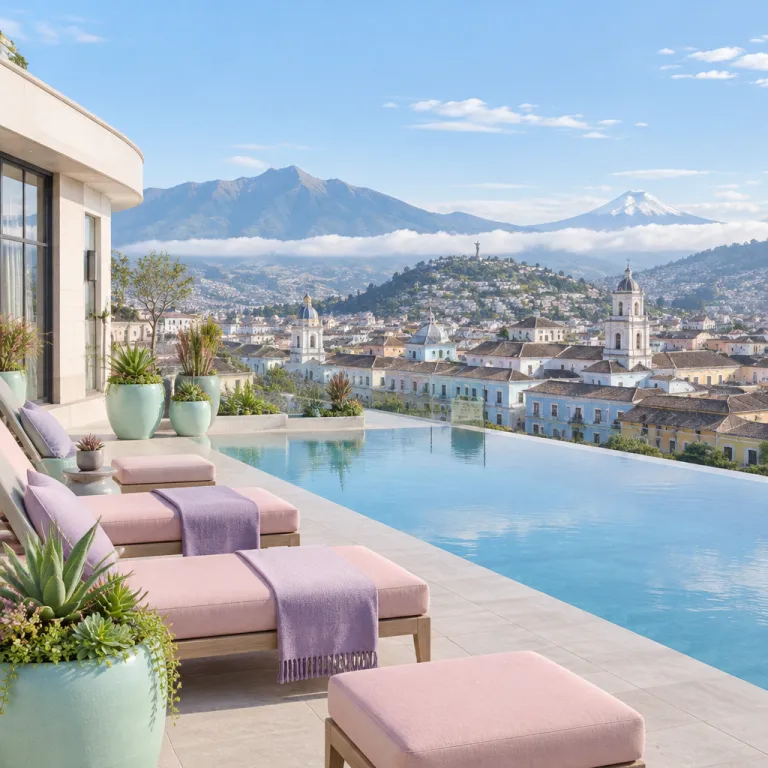
Quito, Ecuador altitude and the art of refined highland stays
The experience of luxury in Quito, Ecuador changes completely once you understand how the Quito, Ecuador altitude shapes every stay. At an elevation of about 2 850 meters above sea level, the capital city offers rare light, crisp air, and a sense of space that many adults feel the moment they step into the historic center. This high altitude setting turns every view over Quito into a dramatic panorama framed by the Pichincha volcano and the green valleys of the northern Andes.
For travelers planning premium accommodation, the Quito altitude is not just a number on a map, it is a design principle that influences architecture, wellness programs, and even how water and oxygen are managed in top tier properties. Many refined hotels in Quito position their suites to capture sunrise over the colonial core, where the historic grid of the capital meets the slopes that rise toward the Pichincha volcano. From these vantage points, the city appears suspended between clouds and the distant Pacific, a reminder that this Andean capital is one of the highest in South America.
Because the elevation of Quito, Ecuador can trigger altitude sickness in sensitive guests, serious luxury operators integrate medical grade advice into their service standards. Staff trained in both English and Spanish explain symptoms of altitude sickness clearly, from mild headaches and shortness of breath to more intense symptoms altitude such as nausea or dizziness. The best properties in the city quietly monitor how adults adapt during the first day, offering oxygen support, herbal infusions, and light menus that respect how the body responds to high altitude conditions.
Highland retreats near Quito city for altitude wise itineraries
Planning a refined itinerary around the Quito elevation works best when you combine the capital with lower elevation highland retreats. Many travelers fly into the capital city and spend their first day in nearby valleys that sit several hundred meters below the main city center, easing the transition from sea level to the Andean plateau. This step by step approach reduces the risk of altitude sickness and allows adults to enjoy the scenery of Ecuador without focusing on sickness or symptoms.
Luxury travelers often pair a stay in Quito with curated journeys to the Quilotoa region, where crater lakes and remote villages define a quieter side of South America. For detailed planning of such routes, a resource like planning a refined stay around the Quilotoa Loop in Ecuador helps align elevation changes with hotel choices and private transfers. By alternating nights between the capital and surrounding valleys, guests experience both the cultural intensity of central Quito and the restorative calm of rural Ecuador landscapes.
When you consider the Quito, Ecuador altitude in your schedule, you can also time visits to iconic sites such as the Mitad del Mundo monument. This area north of the city sits slightly lower than the main urban plateau, which makes walking between exhibits and viewpoints more comfortable for adults still adjusting from sea level. High end lodges in the region design half day excursions that combine the Mitad del Mundo experience with slow paced tastings of local chocolate and coffee, ensuring that symptoms altitude remain minimal while cultural immersion stays deep.
How Quito elevation influences wellness, gastronomy, and sleep quality
The high altitude of Quito, Ecuador affects how your body processes oxygen, and thoughtful luxury hotels turn this challenge into a wellness feature. At around 2 850 meters above sea level, the air in the capital city contains less oxygen than at coastal elevations, which can initially cause mild altitude sickness in some adults. Refined properties in Quito respond with spa circuits, slow breathing classes, and sleep focused amenities that respect the physiology of high altitude stays.
Many premium hotels in the city center now integrate oxygen enriched relaxation rooms where guests can rest after walking the historic streets of Quito. These spaces are especially valuable on the first day, when symptoms of altitude sickness such as fatigue or lightheadedness may appear after climbing steep streets in the old town. Some wellness focused properties also offer guided stretching sessions in both English and Spanish, helping travelers tune into their breathing and circulation at this elevation.
Gastronomy adapts as well, because cooking at the Quito altitude requires different techniques and longer preparation times. Chefs in the capital understand how boiling points change with elevation, and they design menus that are lighter for adults who have just arrived from sea level yet still showcase the agricultural richness of the country. For a broader perspective on how Andean elevations shape refined travel beyond the capital city, resources such as how Cuenca Ecuador altitude shapes luxury highland stays illustrate how altitude, culture, and hospitality intersect across South America.
Historic center elegance in a high altitude capital city
The historic center of Quito, Ecuador is a UNESCO listed district where altitude, architecture, and spirituality converge. Here, the city center rises and falls along narrow streets, and every plaza reveals how the capital city adapted to its Andean setting over centuries. Luxury hotels housed in restored mansions use thick adobe walls and interior courtyards to create calm spaces that shield adults from both the strong equatorial sun and the cooler high altitude evenings.
Walking through the historic center of Quito, you feel how the Quito elevation shapes daily life. Short climbs between churches such as San Francisco and La Compañía can leave visitors from sea level slightly breathless, a normal response to reduced oxygen at this altitude. Attentive concierges advise guests to move slowly on the first day, drink plenty of water, and recognize early symptoms altitude such as mild headaches or unusual fatigue before they become full altitude sickness.
From many rooftop terraces in the city, the Pichincha volcano dominates the western skyline, reminding visitors that this capital in South America sits on the flank of an active volcanic massif. At night, the lights of the city center spread across the valley, and the cool, dry air typical of high altitude climates makes al fresco dining comfortable even for adults sensitive to heat. Refined properties in Quito often provide blankets and heaters on terraces, turning the crisp conditions created by the Quito, Ecuador altitude into a romantic asset rather than a challenge.
Highland excursions from Quito city: volcano views and valley retreats
Beyond the city limits, the Quito, Ecuador altitude opens access to a ring of highland retreats that feel both remote and accessible. Day trips to the slopes of the Pichincha volcano allow guests to ride cable cars from the city center up to viewpoints above 4 000 meters above sea level, where oxygen levels drop further and the panorama of the capital city becomes truly expansive. Because such high altitude excursions can intensify symptoms of altitude sickness, luxury guides pace the ascent carefully and monitor how adults respond to the thinner air.
For travelers who prefer gentler elevations, valleys north of Quito offer refined haciendas surrounded by gardens and Andean peaks. Many itineraries combine a stay in the capital with time near Otavalo, where markets and lakes sit at slightly lower elevation than the main city, easing the strain on visitors arriving from sea level. To align these experiences with premium lodging, curated resources such as Otavalo elegance and refined highland stays help travelers match their tolerance for altitude with the right property and setting.
Whether you head toward the Pichincha volcano or the gentler hills north of the capital city, understanding the Quito altitude allows you to choose excursions that respect your body. Guides fluent in Spanish and English explain how to recognize early symptoms altitude, encourage steady hydration with clean water, and schedule rest stops where adults can sit, breathe, and enjoy the country scenery. This thoughtful pacing turns the potential challenge of high altitude into a measured, elegant way to experience Ecuador highland landscapes.
Practical altitude strategies for luxury travelers in Quito, Ecuador
Preparing for the Quito, Ecuador altitude begins before your plane lands in the capital. Physicians often advise adults arriving from sea level to rest on the first day, avoid heavy meals, and drink more water than usual to support circulation and oxygen transport. Luxury hotels in the city center reinforce these guidelines with welcome briefings that explain how high altitude affects the body and what to do if symptoms of altitude sickness appear.
In refined properties across Quito, staff are trained to recognize symptoms altitude such as persistent headaches, nausea, or unusual shortness of breath. They can arrange medical consultations, provide supplemental oxygen, and adjust activity plans so that guests still enjoy the city without overexertion. Many concierges also help travelers schedule their time in the capital city around cooler hours of the day, when walking the historic center or visiting San Francisco church feels more comfortable at this elevation.
For families or older adults, choosing suites with easy elevator access and proximity to the city center reduces the need for steep climbs in thin air. High end hotels often stock rooms with complimentary bottled water, herbal teas known locally to ease mild sickness, and clear information in both English and Spanish about altitude and health. By treating the Quito elevation as a central element of trip planning rather than an afterthought, travelers transform a potential risk into a refined, well managed aspect of their journey through this Andean capital in South America.
Key figures on Quito, Ecuador altitude and highland travel
- The elevation of Quito, Ecuador is approximately 2 850 meters above sea level, making it one of the highest capital cities in the world according to data from the Ecuadorian Geophysical Institute.
- The TelefériQo cable car on the slopes of the Pichincha volcano rises to about 4 050 meters above sea level, where oxygen levels are roughly 40 percent lower than at sea level based on standard atmospheric models.
- Studies cited by the Centers for Disease Control and Prevention indicate that mild altitude sickness can affect travelers starting around 2 400 meters, which includes most of the urban area of Quito.
- The historic center of Quito covers roughly 320 hectares, and its average elevation varies by more than 100 meters between lower plazas and upper streets, which explains why short walks can feel strenuous for visitors from sea level.
- Tourism statistics from the Ministry of Tourism of Ecuador show that the country receives several million international visitors annually, with Quito and its surrounding highlands ranking among the largest gateways for travel in South America.
FAQ about Quito, Ecuador altitude and luxury highland stays
How high is Quito, Ecuador compared with other capitals ?
Quito, Ecuador sits at about 2 850 meters above sea level, which places it among the highest capital cities worldwide and significantly higher than most major cities in South America. This Quito elevation means thinner air and less oxygen, so visitors from sea level often need a day to adapt. The combination of high altitude and equatorial light creates the clear views that define many luxury hotel panoramas in the city center.
Can altitude sickness be avoided when staying in Quito city ?
Altitude sickness cannot be completely guaranteed away, but its risk can be reduced with careful planning. Adults arriving from sea level should rest on the first day, drink plenty of water, eat lightly, and avoid intense exercise or alcohol while the body adjusts to the Quito altitude. Many high end hotels in Quito offer oxygen support, wellness consultations, and flexible itineraries to minimize symptoms altitude during the first 24 to 48 hours.
Is the historic center comfortable to explore at this elevation ?
The historic center of Quito is walkable, but its hills and stairways feel more demanding because of the high altitude. Most travelers in normal health can explore comfortably by moving slowly, taking frequent breaks, and paying attention to early symptoms of altitude sickness such as shortness of breath or headaches. Luxury properties near the city center often arrange private drivers or guided walks that reduce physical strain while still revealing the character of this capital city.
Are highland excursions from Quito suitable for older adults ?
Highland excursions from Quito city can be suitable for older adults when planned with altitude in mind. Lower elevation valleys and gentle routes around the country offer beautiful scenery without the extreme heights of the Pichincha volcano or other high peaks. Premium tour operators and hotels tailor pacing, transport, and rest stops so that adults of varied fitness levels can enjoy Ecuador highland landscapes safely.
Which language is most useful for managing health questions at altitude ?
In Quito, staff at luxury hotels and medical clinics typically speak both Spanish and English, which makes it easier to discuss altitude related sickness and symptoms. Learning a few basic Spanish phrases helps when speaking with drivers, guides, or pharmacists outside the city center. However, in most high end properties across the capital city, you can comfortably address all questions about the Quito, Ecuador altitude and health in English.