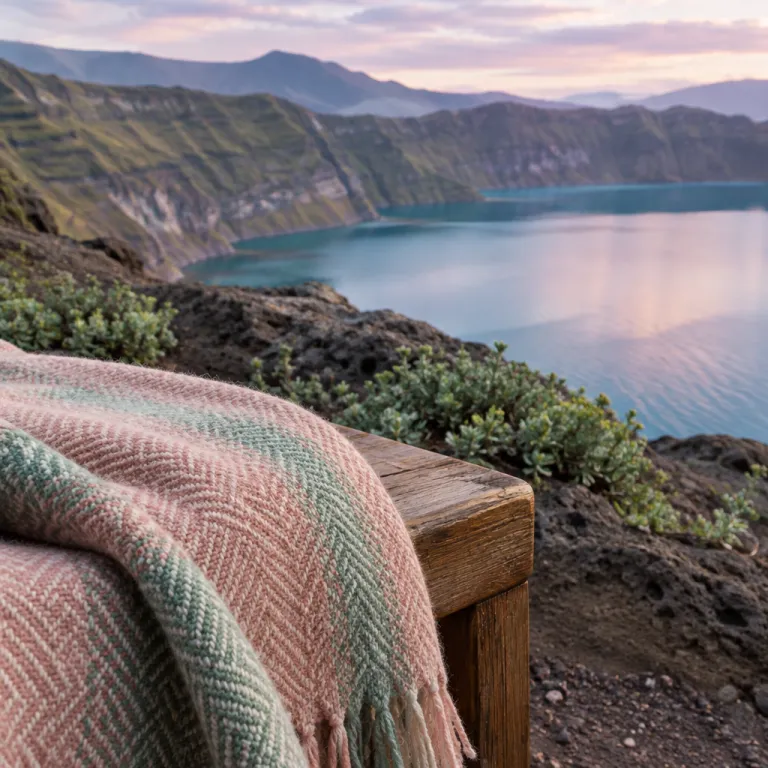
Quilotoa lake: where luxury meets the raw power of a crater
Quilotoa is a dramatic emerald crater lake that instantly redefines what a luxury escape in Ecuador can mean. The lake sits inside the vast Quilotoa crater, a collapsed volcano whose steep walls plunge towards luminous water that shifts from turquoise to deep jade during the day. From the crater rim, guests see the Ecuadorian Andes stretching for kilometres, with every change in light reshaping the surrounding area and revealing new ridgelines, cloud shadows, and distant snow peaks.
Because of the high altitude at Quilotoa lake, refined travellers should plan their trip with care and allow time to acclimatise. Many visitors stay first in Quito or along the Quito Latacunga corridor, then continue by bus or private transfer to the Cotopaxi Province, where the crater lake dominates the skyline. A tailored travel guide from a specialist Ecuador travel planner or concierge service will help you sequence Quito, Cotopaxi, and Quilotoa so that the altitude gain feels gentle rather than abrupt.
The village of Quilotoa itself is small, yet the area around the crater rim now offers a handful of premium lodges with panoramic views of the lake. Properties such as Quilotoa Lodge and Huasquil Quilotoa focus on insulation, fireplaces, and hot water, because temperatures drop sharply at night at such high altitude. When you visit Quilotoa, you are not choosing a classic resort destination; you are choosing a raw, elemental crater lake setting where comfort must be carefully curated and every blanket, stove, and hot drink feels intentional.
From a planning perspective, the time you allocate to the Quilotoa crater will shape the rest of your Ecuador itinerary. Some guests opt for a single day trip from Quito, while others stay two or three days to enjoy the loop hike, the canyon views, and the quiet evenings. If you are combining Cotopaxi and Quilotoa lake, consider at least one night near Laguna Quilotoa so that sunrise and sunset on the crater rim become the emotional high points of your journey, with the water glowing gold at dawn and turning inky blue after dark.
Designing a refined trip around the Quilotoa loop
The famous Quilotoa loop is a multi day route through remote Andean villages, deep canyon landscapes, and high altitude farmland that eventually leads to the crater lake. Many luxury travellers do not hike the entire loop, yet they still use parts of the loop hike as a framework for a more comfortable trip. A curated travel guide can help you select the most scenic sections of the loop while relying on private vehicles instead of public bus connections between villages.
On the southern side of the Quilotoa loop, properties such as Black Sheep Inn and Hostal Cloud Forest near Chugchilán have long attracted hikers who value sustainability and strong ties to local markets. While these are not conventional luxury hotels, they offer characterful rooms, excellent vegetarian food, and privileged access to canyon trails that take hours to explore. Guests who prefer higher comfort often combine a night at Black Sheep Inn or Cloud Forest with a stay at a premium lodge closer to Laguna Quilotoa, balancing authenticity with elevated amenities.
Because the loop passes through the Cotopaxi Province, many visitors pair it with a stay near Cotopaxi itself or with a cruise in the Galápagos Islands. If you are planning a broader Ecuador journey, using a detailed map of the Galápagos Islands for a luxury Ecuador stay can help you visualise how Quilotoa, Cotopaxi, and the islands align in terms of time and logistics. The key is to schedule the most demanding hiking Quilotoa experiences before you fully relax on the coast or on a yacht.
For guests who want to experience the essence of the Quilotoa loop without committing to several days of hiking, private guides can arrange a one day loop hike that starts and ends at the crater rim. This approach allows you to walk along a dramatic trail above the canyon, visit local markets in one or two villages, and return to your lodge in time for a refined dinner. A well planned loop will always consider your fitness level, your comfort with high altitude, and the style of accommodation you prefer at each stop.
From Quito to Quilotoa: elegant logistics and altitude wise planning
Most luxury travellers begin their journey to Quilotoa in Quito, which sits at around 2,850 metres and serves as a natural acclimisation stop before the higher altitude of the crater rim. The route from Quito to Latacunga, often referred to as the Quito Latacunga corridor, is well served by bus, private drivers, and organised tours. For a premium experience, many guests book a private transfer that allows photo stops in the Cotopaxi area and flexible time for lunch.
Once in Latacunga, the road climbs steadily towards Quilotoa lake, and the change in altitude becomes noticeable. A direct bus from Latacunga to the crater typically takes between two and three hours, depending on stops and road conditions. Travellers who value comfort usually arrange a private vehicle through their hotel or a trusted local operator, which ensures that luggage, water, and snacks are handled seamlessly and that the journey feels unhurried.
Before leaving Quito, it is wise to secure a refined base in the capital, both for your first nights in Ecuador and for your return after hiking Quilotoa. Carefully selected Quito hotels for refined stays in hidden urban gems provide quiet rooms, excellent restaurants, and concierge teams who understand the demands of high altitude excursions. These teams can advise on how much time to spend at Quilotoa crater, which day of the week offers the best local markets, and whether a loop hike suits your fitness.
Altitude management is crucial when you visit Quilotoa, especially if you plan to hike down to the lake and back up to the crater rim. Many guests schedule a lighter day in Quito after returning from the crater lake, using spa treatments and gentle city walks to recover. When your itinerary respects the rhythm of your body, the trip from Quito to Quilotoa and back becomes a highlight rather than a strain.
Hiking Quilotoa in comfort: trails, timing, and safety
The classic hike Quilotoa experience involves descending from the crater rim to the shore of Quilotoa lake, then climbing back up along the same trail. Although the distance is short, the combination of steep gradients and high altitude makes this hike more demanding than it appears. Many visitors underestimate the time required, yet the round trip often takes hours, especially if you pause frequently to photograph the water and the surrounding area.
For travellers who value comfort, hiring a local guide for hiking Quilotoa adds both safety and cultural depth. Guides know the best viewpoints along the trail, can explain the geology of the crater lake, and help you judge how much time to spend at the shore before starting the ascent. Some visitors choose to ride mules for part of the climb back to the crater rim, which can be a practical option if the altitude begins to feel overwhelming.
Those seeking a longer loop hike can follow the crater rim path that circles Laguna Quilotoa, offering continuous views of the lake and the distant Cotopaxi volcano on clear days. This loop hike is exposed to wind and sun, so carrying sufficient water, layers, and sun protection is essential at such high altitude. A well prepared travel guide or local operator will brief you on weather patterns, trail conditions, and the best time of day to start.
Safety on the trails around Quilotoa crater depends on respecting the environment and your own limits. Avoid leaving the main trail near the canyon edges, where loose soil can give way, and always allow more time than you think you will need for the return climb. When in doubt, choose a shorter hike and spend extra time on the crater rim terraces of your lodge, where you can enjoy the lake views with a warm drink in hand and watch clouds drift across the water.
Hidden gems around Quilotoa: markets, canyons, and characterful stays
Beyond the iconic view of Quilotoa lake, the surrounding area hides a network of small villages, deep canyon viewpoints, and traditional local markets that reward unhurried exploration. Many luxury travellers arrange a private vehicle for a full day circuit that links Quilotoa crater with communities such as Zumbahua, Chugchilán, and Isinliví. These routes reveal the agricultural life of the Ecuadorian Andes, where sheep, llamas, and patchwork fields form a striking contrast with the blue green water of the crater lake.
The Saturday market in Zumbahua, for example, is one of the most colourful local markets in the Cotopaxi Province, and it pairs naturally with a midday visit Quilotoa stop. After browsing textiles and produce, guests often continue towards the canyon viewpoints near Chugchilán, where trails descend into dramatic gorges that take hours to explore on foot. Properties such as Black Sheep Inn and Hostal Cloud Forest sit near these canyons, offering access to quiet trails and a slower rhythm than the busier crater rim.
For travellers who appreciate refined experiences, a knowledgeable Ecuador travel specialist can identify lodges that combine strong community ties with elevated comfort. Some properties near Laguna Quilotoa focus on Andean design, wood burning stoves, and locally sourced cuisine, turning cold evenings into intimate, atmospheric moments. When your stay integrates both the lake and the villages, the trip becomes less about a single viewpoint and more about the cultural landscape of the Ecuadorian Andes.
To weave Quilotoa into a broader Andean journey, many guests pair these hidden gems with curated experiences in the capital, such as those outlined in this guide to elegant ways to experience the best things to do in Quito. This combination allows you to move from canyon trails and crater rim sunsets back to sophisticated dining and art in Quito. The contrast between remote high altitude villages and urban refinement is one of the great luxuries of travelling in Ecuador.
Choosing the right level of comfort at high altitude
Staying near Quilotoa crater means accepting certain constraints imposed by altitude, climate, and remoteness, yet a thoughtful choice of accommodation will soften these edges. Premium lodges on the crater rim prioritise insulation, reliable hot water, and hearty meals, because the temperature near the lake can drop close to freezing at night. When you book through a trusted Ecuador hotel specialist or directly with the lodges, you can filter options by room size, heating systems, and the quality of lake views.
Some travellers prefer to stay slightly lower than the crater rim, in villages along the Quilotoa loop where the altitude is marginally gentler. In these areas, characterful properties such as Black Sheep Inn and Hostal Cloud Forest offer cosy rooms, composting toilets, and strong community engagement, which appeals to guests who value sustainability as part of their trip. A well informed travel guide will help you understand how much time each transfer takes, how steep each trail is, and whether a particular lodge suits your expectations for comfort.
Water quality and access are also important considerations at high altitude, especially when you plan to hike Quilotoa or attempt a longer loop hike. Most premium properties provide filtered water for guests, yet it remains wise to carry your own reusable bottle on every trail. When you visit Quilotoa, remember that the lake itself is not suitable for drinking, and that respecting the fragile crater ecosystem is part of responsible luxury travel.
Ultimately, the right level of comfort at Quilotoa lake depends on how you balance adventure and ease. Some guests choose a simple yet atmospheric lodge on the crater rim for one night, then return to a five star hotel in Quito for spa treatments and fine dining. Others spend several days along the loop, using local markets, canyon walks, and quiet evenings by the fire to slow the pace of their Ecuador journey.
Integrating Quilotoa into a wider Ecuador itinerary
Quilotoa sits strategically between Quito and the southern highlands, making it an ideal pivot point in a longer Ecuador itinerary. Many travellers combine a stay at Quilotoa lake with time in Cotopaxi National Park, where they can view the snow capped cone of Cotopaxi from elegant haciendas. From there, some continue south towards Baños and the Amazon, while others fly to the Galápagos Islands for a contrasting experience at sea level.
When planning how Quilotoa fits into your trip, consider both the physical demands of hiking Quilotoa and the emotional impact of such a stark landscape. The high altitude, the sheer drop of the crater walls, and the intense colour of the water create a powerful memory that lingers long after you leave. Many guests find that scheduling a quieter day in Quito or in the Cotopaxi area after their visit Quilotoa allows them to process the experience more fully.
Travel time between these regions varies, yet a well designed itinerary will ensure that no single transfer takes hours longer than necessary. Private drivers can link Quito, Cotopaxi Province, Quilotoa crater, and Latacunga in a logical loop, minimising backtracking and maximising time on the crater rim and on scenic trails. A specialist travel guide or concierge from a high end Ecuador travel service can coordinate these elements so that every segment of your journey feels intentional.
Because there is no dataset of verified expert quotes provided for Quilotoa or Ecuador luxury travel, no external expert statements are included here, in line with the requirement to avoid fabricated quotations. Instead, the guidance in this article relies on widely documented facts about the region, common visitor patterns, and the practical realities of high altitude travel in the Ecuadorian Andes. With this framework, you can shape a refined, coherent route that honours both the drama of the crater lake and the comfort you expect from a premium stay.
Key figures for planning a refined Quilotoa stay
- Quilotoa crater lake sits at an altitude of roughly 3,900 metres above sea level, which is about 1,000 metres higher than Quito and makes acclimatisation a serious consideration for luxury travellers (rounded figures based on commonly reported tourism information).
- The descent from the crater rim to the shore of Quilotoa lake is approximately 1.7 kilometres one way, with an elevation change of around 280 metres, and most visitors require between 1.5 and 3 hours for the round trip hike depending on fitness and altitude adaptation (typical times reported by local guides and recent visitors).
- The driving distance from Quito to Quilotoa via Latacunga is roughly 180 kilometres, and travel time typically ranges from 3.5 to 4.5 hours by private vehicle, compared with 4 to 5 hours by bus due to intermediate stops (estimates based on average road speeds and current route conditions).
- Cotopaxi National Park generally receives more visitors per year than Quilotoa, which means the crater lake area often feels less crowded than the Cotopaxi area despite its growing popularity (trend observations from regional tourism statistics).
- Average daytime temperatures at Quilotoa often range between 5 and 15 degrees Celsius, with wind chill making it feel colder on the crater rim, so premium lodges prioritise heating and insulation as core elements of their guest experience (climate patterns reported by Ecuadorian meteorological sources).
FAQ about luxury stays and hiking at Quilotoa
How many days should I spend at Quilotoa for a luxury focused trip ?
For a refined experience that includes both crater rim views and at least one hike Quilotoa trail, plan a minimum of one night and ideally two nights near Quilotoa lake. This allows time to adjust to the high altitude, enjoy sunrise and sunset over the crater, and visit nearby villages or local markets without rushing. Guests who also want to explore the Quilotoa loop or the canyon trails near Chugchilán often extend their stay to three nights.
Is it possible to visit Quilotoa as a day trip from Quito ?
Yes, a day trip from Quito to Quilotoa crater is possible, but it involves a long return journey that takes hours by road. Many organised tours leave Quito early in the morning, stop briefly in the Cotopaxi area or Latacunga, and then allow a few hours on the crater rim and the main trail. For travellers who value comfort and flexibility, an overnight stay at Laguna Quilotoa or along the Quilotoa loop is usually more satisfying.
How challenging is the hike from the crater rim down to Quilotoa lake ?
The trail from the crater rim to the shore of Quilotoa lake is short but steep, and the high altitude makes the return climb demanding for many visitors. Most people descend in 30 to 45 minutes and then require 60 to 90 minutes or more to hike back up, depending on fitness and acclimatisation. Hiring a local guide and allowing generous time for rest stops will make the experience safer and more enjoyable.
What is the best way to travel from Quito to Quilotoa in comfort ?
The most comfortable option is to arrange a private transfer from Quito to Quilotoa via Latacunga, often with a scenic stop in the Cotopaxi Province. This avoids the multiple changes required when using public bus services and allows you to control departure time, rest breaks, and photo stops. Many luxury focused travel planners in Ecuador can coordinate these transfers as part of a wider itinerary that also includes Quito and Cotopaxi.
Can Quilotoa be combined with Cotopaxi and the Galápagos Islands in one itinerary ?
Quilotoa integrates very well into a broader Ecuador journey that includes Cotopaxi and the Galápagos Islands, provided you plan the sequence carefully. A common pattern is to spend time in Quito, continue to Cotopaxi, then visit Quilotoa lake and the surrounding area before flying to the Galápagos from Quito or Guayaquil. Working with a specialist travel guide or concierge helps ensure that each transfer takes a reasonable amount of time and that altitude changes are managed smoothly.