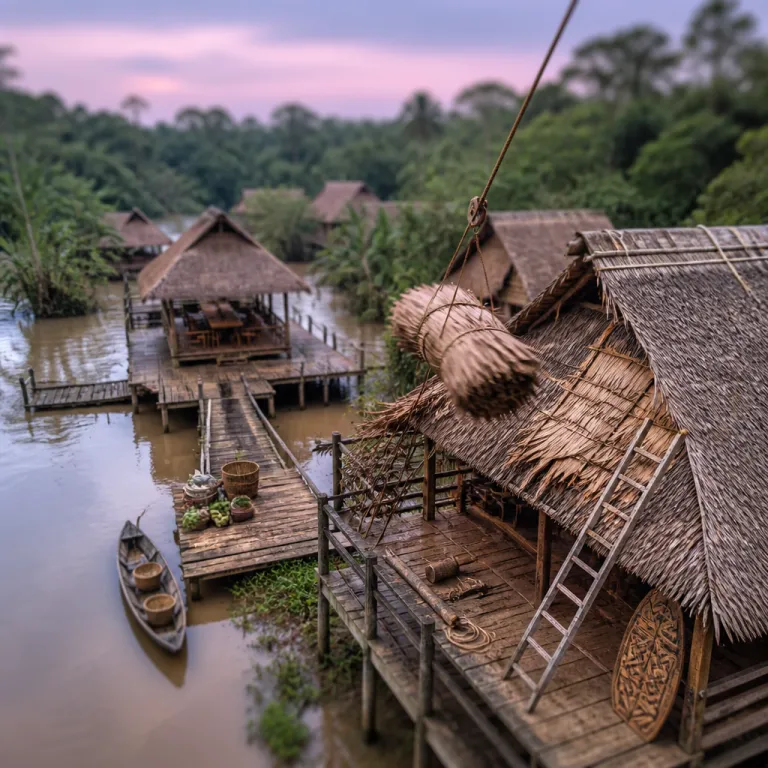
Travel Ecuador as a solo guest: why community lodges matter
When you travel Ecuador alone, the Amazon can feel surprisingly intimate. Yet the lodge you choose determines whether your journey strengthens real communities or mostly funds outside operators. In a region where health, personal safety and cultural respect intersect, staying at a community-run lodge is both an ethical stance and a practical decision for solo visitors.
The Ecuadorian Amazon lies east of Quito and stretches towards the border with Colombia, where access, risk and logistics change from river to river. Within this mosaic, community-owned properties such as Sani Lodge, Kapawi Ecolodge, Sinchi Warmi Amazon Lodge, Waita Lodge and Yasuni Kichwa Ecolodge anchor a new standard for sustainable travel. These lodges are not abstract projects; they are economic engines where profits are channelled back into local families, education and forest protection through community-approved budgets and assemblies that visitors can often learn about on site.
Community-run lodges in Ecuador are typically defined in expert guidance as lodges owned and operated by local indigenous communities, with clear community control over land, infrastructure and decision-making. Responsible tourism organisations such as the Rainforest Alliance and the Global Sustainable Tourism Council describe this model as one where local people hold legal rights or long-term use agreements and directly manage tourism benefits. For solo travellers who exercise high standards of responsibility, this clarity turns an abstract value into a concrete booking filter.
When you plan your Ecuador days in the Amazon, think beyond wildlife checklists and ask who owns the land beneath your hammock. A lodge that is genuinely community based will usually sit on titled ancestral territory, with local authorities in the village assembly deciding how revenue is used and recording those decisions in meeting minutes. At Sani Lodge, for example, the Sani Isla Kichwa community has publicly shared that its assembly allocates tourism income to scholarships, health posts and forest patrols, giving guests a verifiable glimpse into how their stay supports long-term stewardship.
The three diagnostic questions every solo traveller should ask
To navigate travel in Ecuador without falling for greenwashing, you need three sharp questions. Ask them before you send a passport scan, pay a deposit or commit several days of your trip. They work whether you are booking deep in Yasuní or pairing an Amazon stay with refined cloud forest lodges near Mindo, such as those featured in this guide to Ecuador cloud forest refined stays.
The first question is simple: who owns the land and the lodge infrastructure? At Sani Lodge, the answer is the Sani Isla Kichwa community, while at Kapawi Ecolodge it is the Achuar people, and at Yasuni Kichwa Ecolodge it is the Kichwa Añangu community. When you monitor local information from the property, you should see community names, not just a private brand, and you should be able to follow instructions local leaders give about visiting sacred areas or photography. If ownership details are vague or only mention a tour company, treat that as a prompt to ask for clearer information in writing.
The second question is where the revenue goes, including payments for services such as guiding, canoe drivers and kitchen staff. Community lodges in Ecuador often state that a high percentage of profits returns to the village, which is a strong indicator of low financial risk for cultural exploitation. Instead of relying on generic claims, ask for travel advice in writing about how your rate supports education, health posts or conservation, and use that to compare options with a high degree of transparency. Many projects now publish impact summaries or short reports that outline how tourism income has funded school materials, solar panels or community boats.
The third question is who guides you hour by hour, because this shapes both risk management and authenticity. At Kapawi, Achuar naturalists set the pacing, decide which areas to avoid for wildlife protection and lead night walks with a high degree of situational awareness. When you travel Ecuador as a solo guest, that Achuar-led rhythm often feels safer than a generic guide who does not speak the local language or understand emergency protocols. A simple way to check this before booking is to ask whether your primary guide will be from the host community and how they are trained in both safety and cultural interpretation.
Sani Lodge, Kapawi and Sacha: three very different Amazon stays
Among the most compelling places to travel Ecuador as a solo guest, three lodges illustrate the spectrum from fully community owned to comfort-first partnerships. Sani Lodge, on the Napo River near the Yasuní biosphere reserve, is owned by the Sani Isla Kichwa community and has become a reference point for community-based tourism. Kapawi Ecolodge, far deeper in Achuar territory, offers a different tempo where you exercise high patience and curiosity, while Sacha Lodge focuses on elevated comfort with strong but not fully community-based ties.
Sani Lodge stands out for its homestay-adjacent dinner programme, where guests can spend some Ecuador days sharing evening meals with families in the nearby Kichwa village. This is not a staged show; it is a structured way to practise basic Spanish, hear local stories and understand how travel revenue supports schooling and health posts. One Sani community leader has described the programme as “a bridge between our daily life and what visitors imagine the Amazon to be,” highlighting how shared meals can correct stereotypes. For solo travellers, the programme balances intimacy with personal security, because staff follow instructions from community elders about which areas are appropriate to visit after dark.
Kapawi Ecolodge requires a light aircraft flight of around 45 minutes from Shell and then a motor canoe into Achuar territory, a route and duration that the lodge itself publishes in its travel information. This combination makes it feel like essential travel for those who want immersion rather than a quick checklist. The Achuar own the lodge and decide how many days guests should stay, which trails remain closed and how to handle any emergency with a high degree of cultural protocol. Solo travellers often rate Kapawi highly because the Achuar-led pacing leaves space for reflection, ceremony and long conversations about land rights, rather than rushing from activity to activity.
Sacha Lodge, by contrast, is privately owned but has significant community partnerships for staff, guiding and transport services. It is the comfort-first option, with canopy walkways, polished operations and a clear focus on risk reduction in every activity briefing. If you pair Sacha with Andean lake retreats such as those around Cuicocha, highlighted in this piece on refined stays near Cuicocha Lake, you create a travel Ecuador itinerary that balances deep forest immersion with high-altitude calm.
Yasuní versus Cuyabeno: ecosystems, access and solo logistics
When you travel Ecuador into the Amazon, you are really choosing between distinct ecosystems rather than a single generic jungle. Yasuní, accessed mainly via Coca and the Napo River, is a humid lowland rainforest within a UNESCO biosphere reserve. Cuyabeno, where Waita Lodge operates as a Kichwa community project, is a flooded forest and lagoon system closer to the border with Colombia but still firmly within Ecuador.
For solo travellers, Yasuní lodges such as Sani Lodge and Yasuni Kichwa Ecolodge offer dense wildlife, complex river networks and strong community ownership models. Access usually involves a short domestic flight from Quito to Coca, then a motor canoe for several hours, during which staff brief you on safety, emergency procedures and how to avoid sensitive areas. Flight durations and canoe times vary slightly by airline and river level, so it is wise to confirm current schedules directly with your lodge. Because weather can change at short notice, it is also sensible to monitor local conditions through lodge radio and local media updates relayed by staff.
Cuyabeno, by contrast, is reached overland from the Andes and then by canoe, which can reduce flight-related risk but lengthen overall travel time. Waita Lodge, owned and managed by a Kichwa community, sits within this lagoon world where pink river dolphins, anacondas and caimans share the same blackwater channels. The ecosystem’s flooded nature means your Ecuador days here are shaped by water levels, and guides will follow instructions from local authorities about which sectors to close during high water or wildlife breeding seasons. This responsiveness is often documented in park management notices and lodge briefings, giving solo travellers a clear sense of why certain routes change.
Because both Yasuní and Cuyabeno are remote, solo travellers should treat them as essential travel zones where a high degree of preparation is non-negotiable. Carry comprehensive travel insurance that covers medical evacuation, and keep passport copies in separate dry bags in case of emergency. When you travel Ecuador through these regions, you are entering areas where consular assistance may take time to reach you, so you must exercise high awareness and respect every safety briefing.
Health, safety and practical travel advice for solo Amazon stays
Responsible travel Ecuador in the Amazon starts with health planning and realistic risk assessment. The World Health Organization and many national health agencies recommend yellow fever vaccination for large parts of the Amazon basin, and some travellers will also discuss malaria prophylaxis with a medical professional before flying from Quito. Always carry your yellow fever certificate with your passport, because staff at airports or river checkpoints may request it without much notice.
Crime levels inside established lodges are generally low, but you still need to exercise high awareness in transit hubs and urban areas. In Quito and other cities, use a high degree of caution around bus terminals, certain nightlife districts and crowded markets where petty crime can spike. Ask your lodge or hotel for specific travel advice on which areas to avoid, and follow instructions from trusted local authorities rather than relying only on generic online forums.
Violent crime against tourists in remote Amazon lodges is rare, yet the remoteness itself creates a different category of high risk. If you travel Ecuador solo, share your itinerary with a trusted contact at home, including lodge names, dates and emergency radio frequencies if available. In case of an incident, consular assistance may be coordinated through local authorities, so keep embassy numbers and travel insurance details printed as well as stored digitally.
Language preparation also matters more than many travellers expect, because Spanish is the working language for most logistics and emergency coordination. Learn key phrases for health issues, river transport and basic instructions local guides might give you during wildlife encounters. When you monitor local media through lodge briefings and ask clear questions about security and risk, you turn abstract concern into informed, confident travelling that respects both people and place.
Galápagos, borders and how the Amazon fits into a wider itinerary
Many solo travellers who plan to travel Ecuador weave the Amazon between Andean cities and the Galápagos Islands. The islands feel far from the rainforest, yet the same principles of community benefit, risk awareness and environmental respect apply. When you look at refined waterfront stays such as those reviewed in this feature on Galápagos waterfront elegance, you can apply the same three diagnostic questions about ownership, revenue and guiding.
On the Galápagos Islands, health considerations differ from the humid Amazon, but travel insurance remains essential because medical evacuation can be costly. While yellow fever is not a concern on the islands, you still need robust cover for emergency care, missed connections and itinerary changes at short notice due to weather or park regulations. As with Amazon lodges, follow instructions from local authorities and park rangers, who may close certain areas to avoid wildlife stress.
Along Ecuador’s land borders, particularly near the border with Colombia, the calculus shifts again and some zones may be classified as high risk or limited to essential travel only. Solo travellers should monitor local media through reputable outlets and seek up-to-date travel advice from their embassy before planning overland crossings. If you must transit these regions, coordinate with trusted transport services, keep copies of your passport secure and maintain a high degree of situational awareness.
Threading all these regions together, the core lesson is that meaningful travelling in Ecuador demands curiosity about who benefits from your presence. Whether you are in a community-owned lodge in Yasuní, a comfort-forward property in the Galápagos or a refined Andean retreat, the same three questions will keep your impact honest. Ask who owns the land, where the money goes and who guides you, and you will travel Ecuador with both elegance and integrity.
FAQ: community lodges and safe solo travel in the Ecuadorian Amazon
How can I verify that a lodge is genuinely community owned ?
Start by checking whether the lodge clearly names the indigenous community that owns both the land and the infrastructure, as Sani Lodge, Kapawi Ecolodge, Sinchi Warmi Amazon Lodge, Waita Lodge and Yasuni Kichwa Ecolodge all do in their public materials. Ask for written confirmation that community assemblies or local authorities decide how profits are used, and request details on what percentage of revenue returns to education, health and conservation. Genuine projects will answer transparently and often share stories, photos or basic data about their social impact, sometimes even inviting guests to observe non-sensitive parts of community meetings.
Is it safe to travel solo to Amazon lodges in Ecuador ?
Established lodges in Yasuní and Cuyabeno maintain strong safety protocols, including trained guides, radio communication and clear emergency procedures. The main risk lies in remoteness, so solo travellers should carry comprehensive travel insurance, share itineraries with someone at home and follow instructions from lodge staff at all times. Use a high degree of caution in transit hubs such as Quito and Coca, where petty crime is more common than inside the rainforest itself, and rely on verified transport arranged through your lodge whenever possible.
Do I need Spanish to stay at a community run lodge ?
Many lodges provide English-speaking naturalist guides, but Spanish is often the working language for boat drivers, cooks and village meetings. Learning basic phrases for health issues, river logistics and polite greetings will deepen your experience and help in any emergency. It also shows respect for local culture and makes it easier to follow instructions local leaders may give during community visits or when conditions change quickly on the river.
What health precautions should I take before visiting the Amazon ?
Consult a travel health clinic about yellow fever vaccination, malaria prophylaxis and other region-specific advice at least several weeks before departure, following guidance from sources such as the WHO or your national health service. Pack personal medications, insect repellent, long sleeves and a small first aid kit, and inform the lodge of any conditions that might affect emergency care. Keep your passport, vaccination card and travel insurance details accessible in a waterproof pouch during river transfers.
How many days should I plan for an Amazon stay in Ecuador ?
For most solo travellers, four to five Ecuador days in the rainforest strikes a balance between travel time and meaningful immersion. This duration allows for multiple wildlife outings, community visits and rest periods, especially at remote lodges like Kapawi where access involves flights and long canoe rides. If you are combining the Amazon with the Galápagos Islands or Andean regions, build in buffer days to accommodate weather delays or short-notice itinerary changes, a precaution many experienced operators now recommend in their booking conditions.